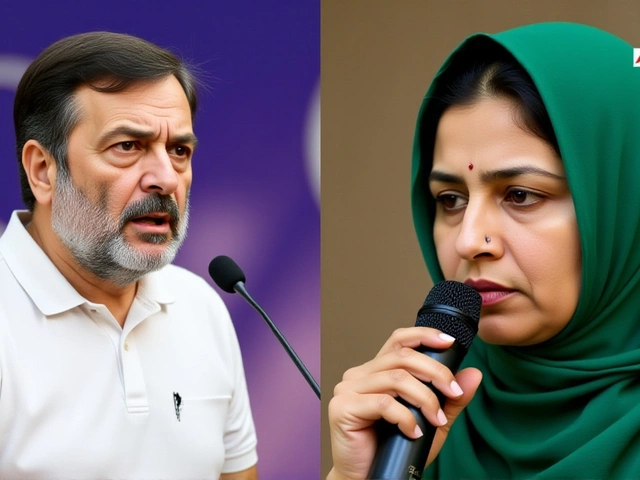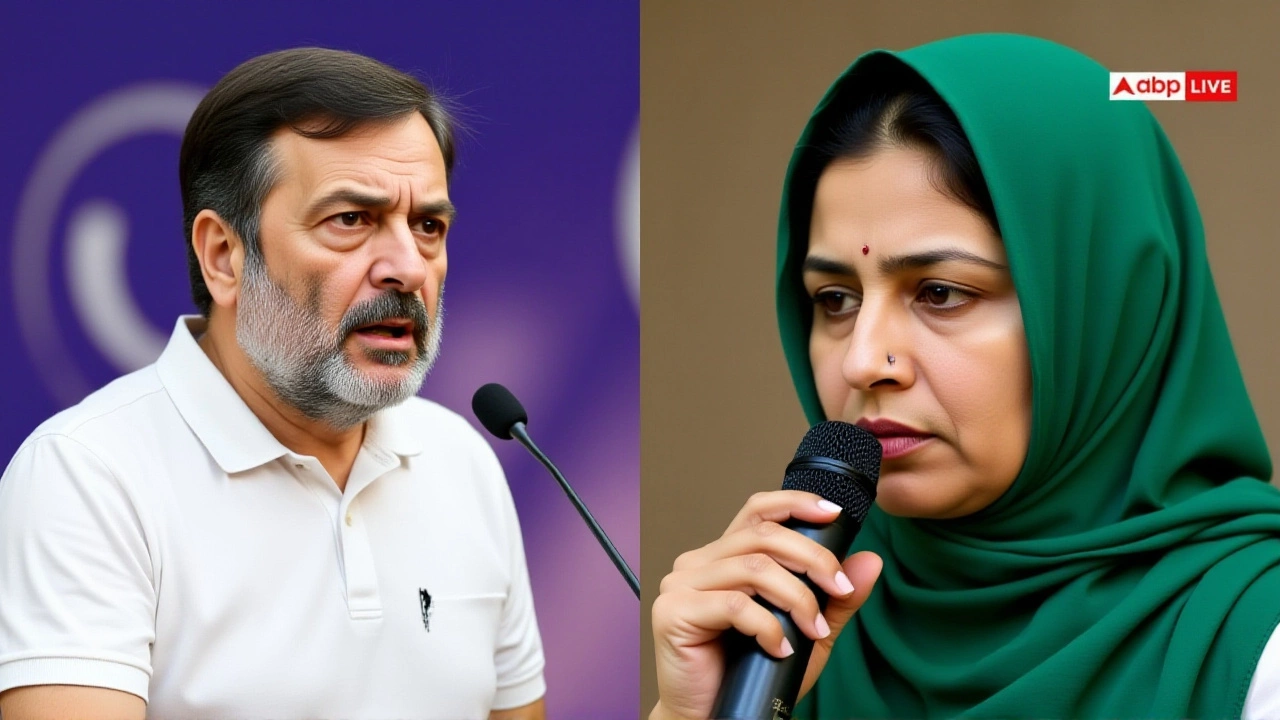
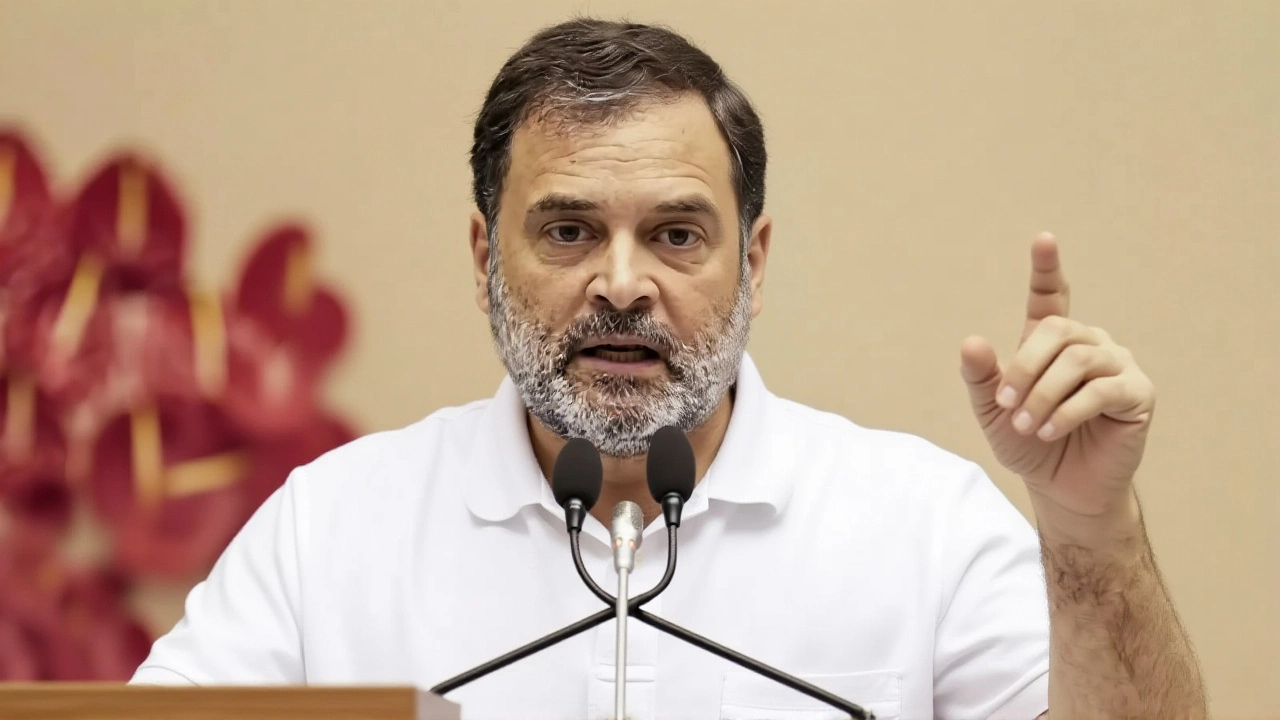
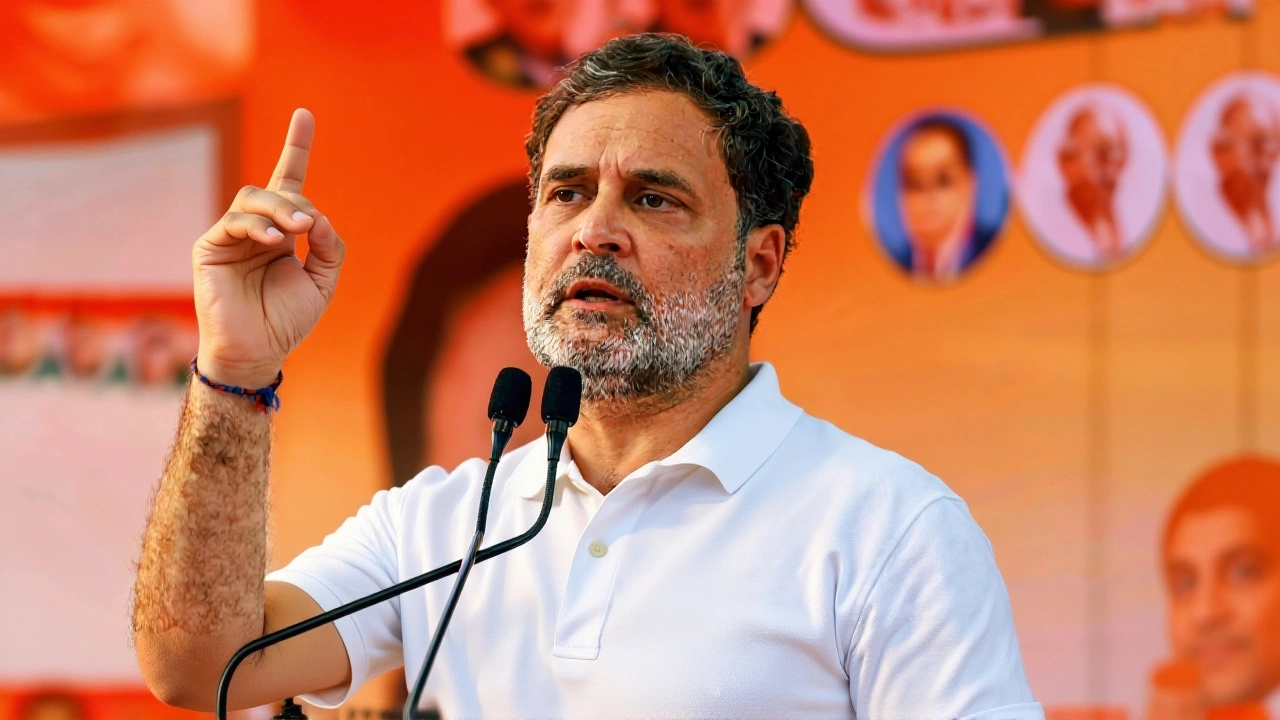
When Rahul Gandhi, Leader of the Opposition in the Lok Sabha and Indian National Congress MP, took to the stage in his constituency of Raebareli, Uttar Pradesh, India, he didn't just criticize the government—he called its leaders "traitors." The remark, directed at Narendra Modi, Prime Minister of India and Home Minister Amit Shah, instantly ignited a political firestorm across the nation. It’s not every day that opposition rhetoric crosses into such personal and severe territory, but here we are.
The incident occurred during a public rally on May 20, 2026. Gandhi accused the central leadership of attacking the Constitution and selling off the country's economic system. He claimed an "economic storm" is looming over the nation. But wait—the reaction wasn't just from the ruling party. It sparked a broader debate about political language in India, drawing responses from unexpected corners, including Jammu and Kashmir politics.
The Accusation: Constitutional Betrayal?
Here’s the thing: Gandhi’s comments weren’t isolated jabs. According to reports from NDTV and Times Now Navbharat, he specifically labeled both Modi and Shah as traitors because, in his view, they have assaulted the Constitution. He argued that their policies have compromised national integrity. The anchor on Times Now’s program "Aaj Ki Badi Khabar" noted that this marks another escalation in Gandhi’s rhetoric against the Prime Minister. Previously critical, Gandhi now appears to be framing the administration’s actions as existential threats to the republic itself. He also targeted the Rashtriya Swayamsevak Sangh (RSS), bringing the ideological parent organization of the BJP into the crosshairs.
Gandhi alleged that Modi had "sold Hindustan’s economic system." While specific policy details were vague in the immediate aftermath, the sentiment tapped into widespread anxiety about inflation and unemployment. With petrol prices in New Delhi hovering around ₹94.77 per litre and diesel at ₹87.67, the cost of living remains a sore point for voters. Connecting these daily struggles to high-level accusations gives the speech emotional weight, even if it lacks granular policy critique.
BJP’s Counterattack: "Poisonous Mindset"
Turns out, the Bharatiya Janata Party (BJP) wasn’t going to let this slide. Their response was swift and scathing. Aaj Tak reported that the BJP described Gandhi’s remarks as evidence of a "poisonous mindset," "extremely narrow thinking," and "deep despair." Pradeep Bhandari, a senior spokesperson for the Bharatiya Janata Party (BJP), went further. He accused Gandhi of calling 1.4 billion Indians traitors by extension. Bhandari compared Gandhi’s language to that of Pakistan, suggesting it mirrored hostile foreign narratives rather than domestic dissent. This is a common tactic—framing criticism as anti-national—to delegitimize the opposition’s moral standing.
The term "urban naxal" was also thrown around, linking Gandhi’s rhetoric to left-wing extremism. It’s a label designed to paint critics as violent radicals, regardless of their actual methods. Whether effective or inflammatory depends entirely on who you ask. On social media, videos of the backlash in Uttar Pradesh gained traction quickly. One News18 video titled "PM Modi vs Rahul Gandhi" racked up 59,000 views within three days, showing locals expressing anger at the Congress leader’s words.
Mahbouba Mufti’s Sharp Retort
But the most interesting twist came from Mahbouba Mufti, former Chief Minister of Jammu and Kashmir and President of the Jammu & Kashmir Peoples Democratic Party (PDP). She didn’t defend Gandhi directly. Instead, she flipped the script. Mufti pointed out that since 2014, the BJP has routinely labeled secular voices as "traitors" and "anti-nationals." She told ABP Live, "It has become the BJP’s tongue to call every secular person a traitor, to tell them to go to Pakistan, and now even to Iran." Her comment highlights a double standard many observers note: when the opposition uses strong words, it’s condemned; when the ruling party does it, it’s often dismissed as patriotic fervor.
This perspective adds depth to the controversy. It’s no longer just about one man’s choice of words. It’s about the normalization of aggressive political labeling in Indian discourse. Mufti’s intervention reminds us that the stakes feel higher in regions like Kashmir, where identity and sovereignty are constantly debated. For her, the word "traitor" isn’t new—it’s a weapon she says has been wielded against her community for years.
Why This Matters Beyond the Noise
So why should you care? Because language shapes reality. When leaders use terms like "traitor," they aren’t just insulting opponents—they’re redefining loyalty. In a democracy with diverse viewpoints, equating disagreement with disloyalty can erode trust in institutions. Experts warn that such rhetoric polarizes society. Dr. Anjali Sharma, a political analyst at Delhi University, noted, "When constitutional criticism is framed as treason, it chills legitimate dissent. Voters may start fearing to question policies without being labeled enemies of the state."
Moreover, this clash occurs ahead of crucial state elections. Both parties are testing waters, gauging voter sentiment through shock value. Gandhi aims to mobilize urban youth and marginalized groups hurt by economic stagnation. The BJP seeks to consolidate its base by portraying itself as the guardian of national unity against divisive forces. The result? A louder, more heated political environment where nuance gets lost in soundbites.
What’s Next?
We’ll likely see continued tit-for-tat attacks in parliament and on television debates. Expect more rallies, sharper speeches, and possibly legal challenges if defamation claims arise. The Supreme Court might eventually need to weigh in on what constitutes acceptable political speech versus hate speech—a delicate balance in any vibrant democracy.
For now, the dust hasn’t settled. Social media feeds remain flooded with memes, clips, and counter-arguments. Ordinary citizens in Raebareli and beyond are watching closely. They want jobs, affordable fuel, and respectful governance—not just shouting matches between elites. Whether either side delivers on substance remains the real test.
Frequently Asked Questions
Who did Rahul Gandhi call a traitor?
Rahul Gandhi referred to Prime Minister Narendra Modi and Home Minister Amit Shah as "traitors" during a rally in Raebareli, Uttar Pradesh, on May 20, 2026. He accused them of undermining the Constitution and harming the nation’s economy.
How did the BJP respond to these comments?
The BJP strongly condemned the remarks, calling them indicative of a "poisonous mindset." Spokesperson Pradeep Bhandari accused Gandhi of aligning with Pakistani narratives and labeled him an "urban naxal," implying extremist tendencies.
What did Mahbouba Mufti say about the situation?
Mahbouba Mufti, leader of the PDP, criticized the BJP for routinely using labels like "traitor" and "anti-national" against secular individuals since 2014. She highlighted how such language marginalizes dissenting voices, particularly in Jammu and Kashmir.
Why is the RSS mentioned in this controversy?
Rahul Gandhi included the Rashtriya Swayamsevak Sangh (RSS) in his criticism, accusing it of influencing policies that harm the Constitution. As the ideological backbone of the BJP, targeting the RSS amplifies the challenge to the entire right-wing political ecosystem in India.
Could these remarks lead to legal action?
While politicians often face defamation suits, courts usually grant leeway for robust political debate unless statements incite violence or false facts are proven. Legal experts suggest any case would hinge on whether "traitor" implies criminal intent or mere political disagreement.