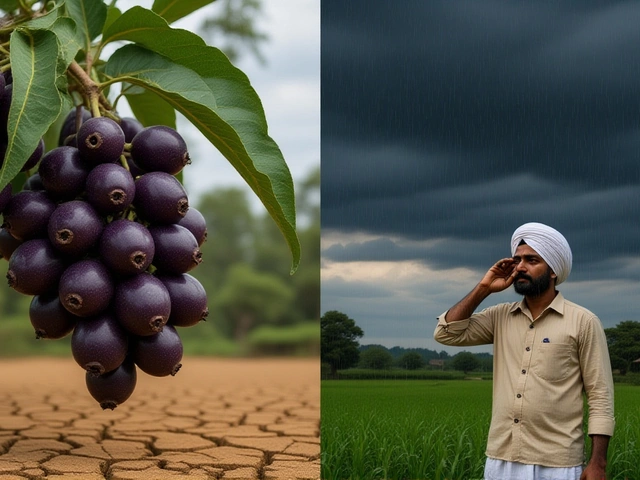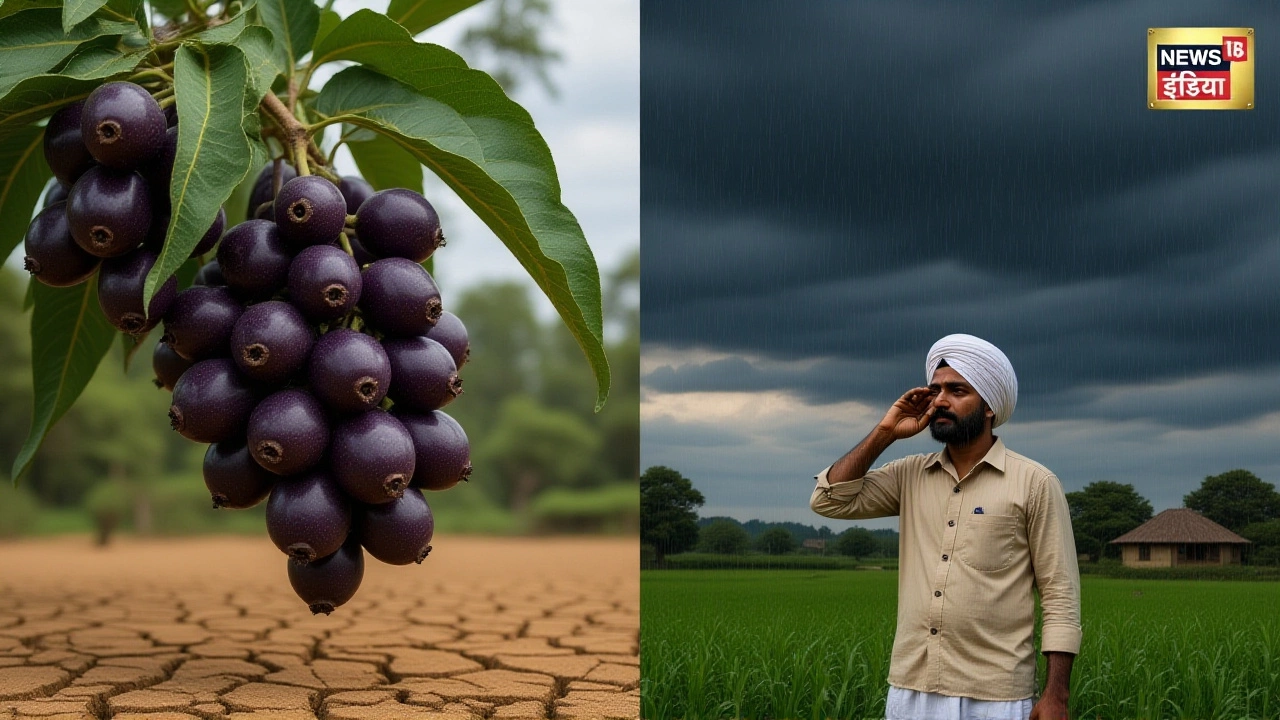
There’s a strange tension hanging over India right now. The air is thick with the sweet, sour scent of jamun (Java plum) hitting markets in record numbers, yet farmers are staring at dry fields and asking a terrifying question: where is the rain? As we move through early 2026, this juxtaposition of bumper fruit harvests and parched soil has sparked serious anxiety about the upcoming Southwest MonsoonIndian Subcontinent.
The concern isn't just seasonal chatter. It’s rooted in hard data from India Meteorological Department, which monitors rainfall patterns across the nation. With approximately 60% of Indian farmers relying solely on monsoon rains for irrigation, any delay or deficit could trigger a crisis reminiscent of historical droughts linked to El Niño events.
The Jamun Paradox: A Folk Warning?
Here’s the thing about nature’s signals—they’re rarely subtle. In rural India, a heavy jamun harvest during the pre-monsoon months is often viewed as an omen. Traditionally, it suggests that the heatwave was intense enough to boost fruit production but potentially drained the atmospheric moisture needed for timely rains. While science doesn’t officially endorse folk meteorology, the correlation feels unsettlingly real this year.
Turns out, the trees aren’t the only ones sounding the alarm. Climate models indicate that sea surface temperatures in the Pacific Ocean have been rising, creating conditions favorable for El Niño. This phenomenon typically suppresses rainfall in South Asia. If history is any guide, the stakes couldn’t be higher.
Shadows of 1876–1878: Why History Matters
To understand the gravity of the current situation, you have to look back. Reports circulating among agricultural experts cite the devastating Great Famine of 1876–1878. During that period, a severe El Niño event caused sea surface temperatures in the Pacific to spike by roughly 3°C above average. The result? A catastrophic failure of the monsoon.
The human cost was staggering. Historical records suggest that over 5.5 million people died due to starvation and disease-related complications stemming from the drought. It wasn’t just bad weather; it was a systemic collapse triggered by climate anomalies. Experts warn that while modern logistics prevent such mass mortality, the economic shockwaves would still be devastating for a country where agriculture contributes significantly to GDP.
The Farmer’s Reality: 60% Dependence on Rain
Let’s talk numbers. Approximately 60% of India’s farming community depends entirely on rainfall for irrigation. They don’t have access to reliable canal systems or deep groundwater reserves. For these millions of livelihoods, the monsoon isn’t just weather—it’s life support.
If the 2026 monsoon arrives late or falls short of the Long Period Average (LPA), the impact will be immediate. Crop yields for staples like rice, pulses, and cotton could drop sharply. This isn’t hypothetical. In recent years, even minor deviations from the LPA—defined by the IMD as between 90% and 110% of the average 880.6 mm rainfall—have led to significant inflation in food prices and reduced rural incomes.
What Scientists Are Saying
The details are still being refined, but the consensus among climatologists is cautious. The India Meteorological Department continues to monitor the Pacific Ocean closely. An El Niño episode develops when trade winds weaken, allowing warm water to shift eastward. This disrupts the atmospheric circulation that drives monsoon winds toward India.
Interestingly, some models suggest a "hybrid" scenario might emerge, where La Niña-like conditions in other parts of the globe counteract the El Niño effect slightly. But relying on that balance is risky. As one senior meteorologist noted, "We can’t afford to gamble with the livelihoods of half our farming population. Preparation must assume the worst-case scenario."
Broader Economic Implications
The ripple effects extend far beyond the farm gate. A weak monsoon impacts industrial output, particularly in sectors like textiles and agro-processing. It also strains urban water supplies, as reservoirs fill up primarily during the rainy season. Cities like Mumbai and Bangalore already face water stress; a poor monsoon exacerbates this, leading to tanker dependence and rising costs for everyday consumers.
Furthermore, global markets watch India’s grain output closely. Any shortfall here could push up international commodity prices, affecting food security in import-dependent nations. The interconnectedness of modern supply chains means that a drought in Maharashtra can eventually show up in your grocery bill thousands of miles away.

What’s Next for 2026?
For now, everyone is waiting. The official onset of the monsoon is expected around June 1st, but early signs are ambiguous. Farmers are advised to plant drought-resistant crop varieties and conserve water resources. Government agencies are reviewing contingency plans for crop insurance and relief funds.
The coming weeks will be critical. If the Pacific cools down, the threat of El Niño may recede. If it stays hot, brace for a challenging season. One thing is certain: the jamun harvest won’t save the crops if the skies remain clear. We’ll need more than fruit; we’ll need rain.
Frequently Asked Questions
Why is a bumper jamun harvest considered a bad sign for the monsoon?
In traditional Indian folklore, an excessive jamun harvest during the pre-monsoon heat is believed to indicate intense solar radiation and high temperatures. These conditions can deplete atmospheric moisture and strengthen high-pressure systems, potentially delaying or weakening the arrival of the southwest monsoon. While not scientifically proven, it serves as a cultural indicator of climatic stress.
How does El Niño affect India's rainfall?
El Niño is characterized by warmer-than-average sea surface temperatures in the central and eastern Pacific Ocean. This warming disrupts global wind patterns, often suppressing the convection activity over the Indian Ocean. Consequently, it leads to weaker monsoon winds and reduced rainfall across large parts of India, increasing the risk of drought.
What percentage of Indian farmers rely on monsoon rains?
Approximately 60% of India's farming community depends directly on monsoon rainfall for irrigation. These farmers lack access to reliable artificial irrigation infrastructure such as canals or tube wells, making their livelihoods highly vulnerable to any delays or deficits in seasonal precipitation.
What was the impact of the 1876–1878 El Niño event?
The 1876–1878 El Niño event caused severe drought conditions in India, leading to the Great Famine. Historical estimates suggest that over 5.5 million people died due to starvation and related diseases. Sea surface temperatures in the Pacific rose by about 3°C above normal, highlighting the extreme power of this climate phenomenon.
What is the Long Period Average (LPA) for India's monsoon?
According to the India Meteorological Department, the Long Period Average (LPA) for all-India southwest monsoon rainfall is 880.6 millimeters, based on data from 1961–2010. Rainfall within ±10% of this value (between 792.5 mm and 968.7 mm) is classified as 'normal.' Deviations outside this range are categorized as deficient or excess.